Dracula and Bran Castle: myth, history and the real story
Did Bram Stoker write about Bran Castle?
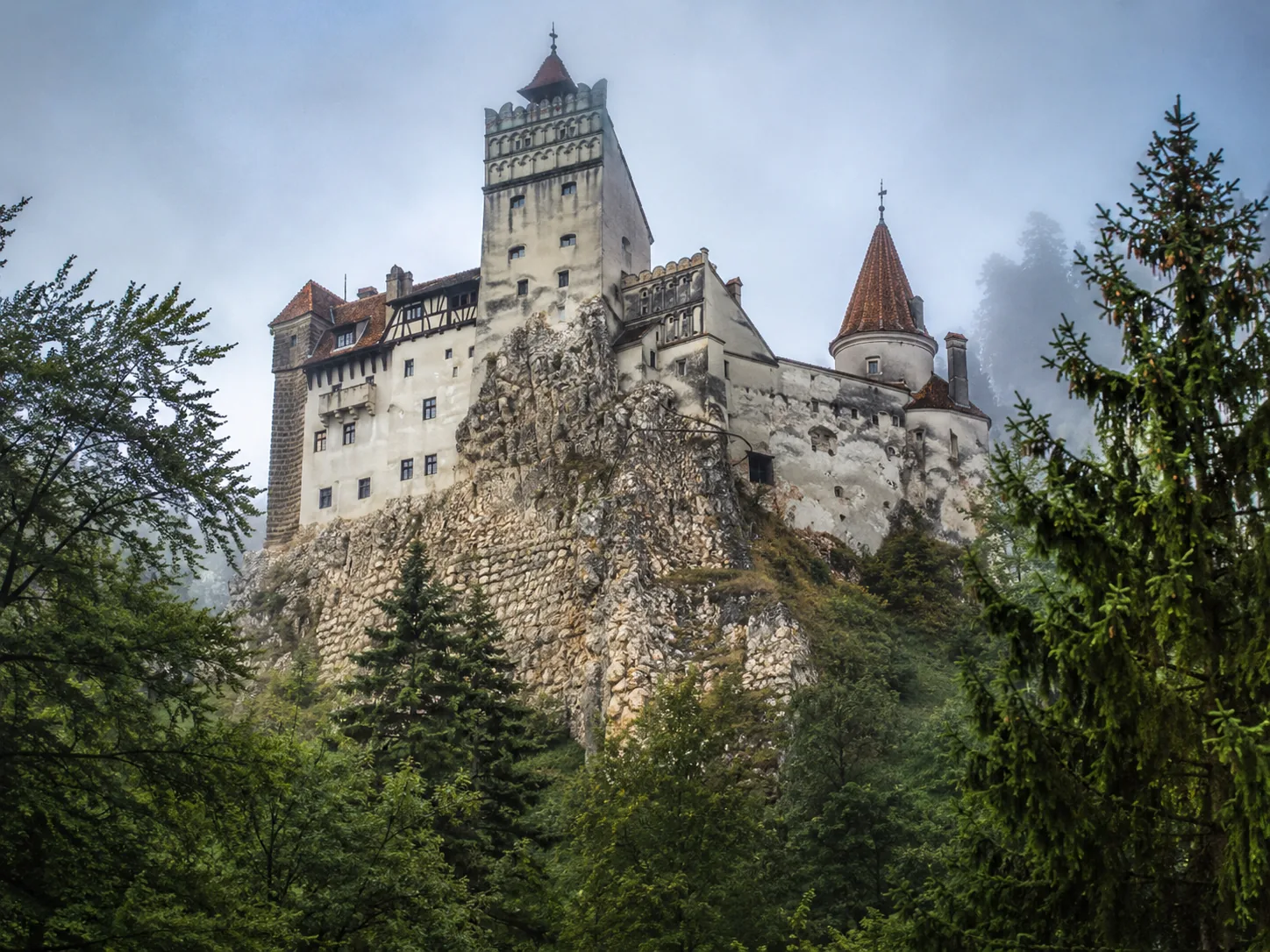
No. Stoker never set foot in Romania. When he wrote Dracula (1897), he researched the country from London, consulting histories and maps. The castle in the novel — described as a fortress on the border between Transylvania and Wallachia, with narrow staircases and mountain gorge views — does match Bran’s location and layout. The association is real. But Stoker invented the vampire mythology and pinned it to a fictional castle inspired by the landscape, not to a specific building he had seen. The connection between Stoker’s novel and Bran itself is a 20th-century tourism invention.
Who was Vlad the Impaler?
Vlad III, called "the Impaler" (Vlad Țepeș), was born in 1431 in Sighișoara (a town 90 km north of Bran). He became ruler of Wallachia (southeast of the Carpathian Mountains) in the 15th century and earned his reputation for brutal governance — he used impalement as a punishment and strategy against Ottoman invasion. He ruled Wallachia three times and fought the Ottomans fiercely. His name, Vlad, combined with his father’s epithet "Dracul" (the Dragon), gave Stoker the Dracula name. But Vlad the man was a regional warlord and military tactician, not a vampire — and he had no connection to Bran.
Where did Vlad actually live?
Poenari Castle in the Argeș valley (south of Bran, near Curtea de Argeș) is Vlad’s known fortress. It sits atop a 60 m cliff with 1,480 stone steps leading to the ruins. Historians agree Vlad used Poenari as a base. At most, he may have passed through or been briefly held near Bran during Ottoman campaigns, but no records place him living there. Poenari is the real historical site; Bran is the fictional association.
Read more on Wikipedia: Vlad the Impaler. Poenari Castle Wikipedia.
What happened at Bran Castle in real history?
Bran was first documented in 1377. The Saxons of Kronstadt (Brașov, a neighboring city) built it as a customs fortress on the trade route between Transylvania and Wallachia. It served as a defensive border post for centuries. In 1920, Queen Marie of Romania (wife of King Ferdinand) chose Bran as a royal residence and decorated it with her personal collections. The castle remained a royal home until 1948, when it became state property. In 2009, after restitution to the Habsburg heir Archduke Dominic, it reopened as a museum of Queen Marie’s furniture and collections. It is still privately run today. No vampires; just regional politics and royal taste.
The Nosferatu film (1979)
German director Werner Herzog filmed key scenes of Nosferatu the Vampyre (1979) on location at Bran Castle. The film is a remake of the silent-era Nosferatu (1922) and adapts the Dracula story for a modern audience. The castle’s gothic silhouette and narrow interiors made it ideal for the production. That film brought international attention to Bran’s Dracula association and sparked the modern "Dracula tourism" industry.
How the Dracula brand grew
The castle isn’t hiding its Dracula association — the official gift shop sells Dracula merchandise, and the souvenir strip outside features Dracula imagery. It’s clever marketing: the castle capitalises on a fictional brand that brings visitors. But it’s honest about the reality if you ask the staff or read the official history. The interior is a 1920s royal home with period furniture, not a vampire lair. Visitors often comment that the castle underwhelms those expecting a Gothic horror set, but impresses those interested in royal history and architecture.
Book a Dracula day trip from Bucharest
Combine Bran with Peleș Castle and Brașov in one trip. Learn the real history and mythology together — €10 from Bucharest.
Other Dracula sites in Romania
If you want the full Dracula-history picture, visit Sighișoara (Vlad’s birthplace, 90 km away, a medieval walled town) and Poenari Castle (Vlad’s real fortress, further south). Most day trips combine Bran with Peleș Castle (another royal home) and Brașov Old Town, which is richer for context than Bran alone.
Romania Tourism: Dracula Legend. Bran Castle Wikipedia.
Frequently asked questions
Did Dracula really live at Bran Castle?
No. Vlad the Impaler was born in Sighișoara and lived at Poenari Castle. The Dracula–Bran connection is 20th-century tourism marketing inspired by Stoker's novel.
Did Bram Stoker visit Bran?
No. Stoker never visited Romania. He researched the country from London and created a fictional castle inspired by the landscape, not a specific building.
What was Bran Castle really built for?
A Saxon fortress from 1377, used as a customs post on the Transylvania–Wallachia trade border. Queen Marie made it a royal residence in 1920. Now a museum.
Where is Vlad the Impaler's real castle?
Poenari Castle in the Argeș valley (south of Bran), a 60 m ruin with 1,480 stone steps. That is the historical fortress linked to Vlad.
Was Nosferatu filmed at Bran?
Yes. Werner Herzog shot key scenes there in 1979. The film popularized Bran's Dracula association, but the castle itself is not the Dracula residence.